
Is spring here
yet? On March 25, it snowed lightly, and again on March 30, even though spring
supposedly started on March 21 and the cherry blossoms are usually out by now.
Not this year. My poor African visitors
are unprepared and feeling very chilly (me too!). Only 2 showed up, though 3
had asked to come to my house. A lady
from Zimbabwe said she was coming in on March 25 at 4:30 pm, so I waited up
until midnight, although I had to get up the next morning at 4 am for a hospital
interpretation assignment. She never
showed. Then I learned via the program she was supposed to attend that she had
cancelled, or else that her government had cancelled, her trip. My visitors
want cable TV, but I don’t have TV at all and never watch it. Also, there is a
problem with adapter plugs for their computers and other electronic equipment.
I like having foreign visitors but cannot always provide them with all the
comforts of home. One of the comforts that these professional women have is
live-in servants who cook, clean, and wash their clothes for very modest pay,
while here they must perform these tasks themselves.
As would be expected, the Peace
Corps has removed all of its volunteers from Ukraine. If it was like
pull-outs from other countries, including Honduras in 2012, many volunteers
resisted. Occasionally, when a decision has been made for the Peace Corps to
leave a country for safety reasons, some volunteers have quit the corps and
remained on their own. I’ve been surprised to hear for the first time appeals for Peace Corps volunteers on my local NPR station and also a promotion there from the American Occupational Therapy Association, my old employer. I do think that OT is a misunderstood profession.
My new book is out now, Confessions of a Secret Latina: How I Fell Out of Love with Castro & in Love with the Cuban People. It seems to have hit a chord with a number of readers, some of them quite enthusiastic. But one reader thought I could have massaged the text a little more, which is always the case, no matter what the book. Yes, there are things I might have done differently in retrospect if I had had infinite time and patience, but I finally decided to just go ahead with the book as-is, as I needed to move on toward other things I wanted to accomplish. Time is limited, no book is perfect, and, with a computer, the temptation is to revise and revise forever. I finally had to stop. And I am pleased that most readers so far have found the book interesting and informative.
I once had a good friend and neighbor, Doris Miller, a colleague in our local Amnesty International group, who retired early from government service to write a book that had been brewing on the back burner of her mind for years about the Parable of the Talents by Matthew in the New Testament. She had an unusual interpretation. She did extensive research at the Library of Congress and read many related works. Over two decades went by and she was still working on it on her computer, though computers then were not quite so advanced as now. She wouldn't let any of her friends or family see her manuscript. She moved from DC to Florida and continued working on the book. While I was in the Peace Corps, when she was well into her 80s, she came back up to DC to do more research at the Library of Congress, fell ill with pneumonia and her family, anticipating her imminent demise, rushed the book into print from her existing manuscript and brought a copy to her bedside. She died in the hospital and copies of her slender book, with its somewhat esoteric arguments, were sent to her closest friends. I still have a copy. Now, I’ve found that her book lives on, well beyond her own life, and has been welcomed in scholarly circles. But she never considered her work finished. Almost any book, even the classics, could be improved. I don’t pretend that my own new book, another memoir, which certainly makes no pretense of being a work of erudition, will be as memorialized as my friend’s little book has been, but I do hope it will broaden my readers’ understanding not only of my own life, but of Cuba and Cubans. That’s what I’m aiming for.
On my return from Honduras, I made a brief stopover in Miami, where, on March 2, I gave a talk at an independent bookstore, Books & Books, in Coral Gables, as per photo above.
I’ve returned to my part-time work as a Spanish interpreter in hospitals and schools. One of my recent patient-clients was a man from Cuba who had come to this country with his wife and children via the 1980 Mariel boatlift, like my late foster son Alex, as per my recent book.
I’ve now heard on this blog from Emilio, a boy in Spain who collects stamped envelopes from all over the world and posts them on his blog. He asked me to send him a stamped envelope from Honduras, which I did when I was there, and which he has now posted.
Honduras Trip- February 2014
In
March, soon after my return from Honduras,
I celebrated my 76th birthday, not any particular milestone, but
a reminder that I’m not getting any younger. With each passing year, when I
return from Honduras, I always wonder, if will I be back again next year? So
far, I’ve returned 10 times, but it’s always been a last-minute decision. At my age, I don’t make plans very far in advance.
This
year was no different, with the result that, as in 2013, again for some reason,
my return trip required a first-class
ticket, while I was able to fly tourist while going to Honduras. It’s a
luxury to travel first-class. I’d never done it before 2013; you are really quite
pampered. Instead of just a cold drink, you are offered a damp, warm washcloth
to clean your hands and, if it is afternoon, you may choose a glass of wine or
champagne, then have your choice of a meal with salad and dessert served on
china with metal silverware, or if on a morning flight, you are given an ample
breakfast with juice and coffee. The seats are roomy with plenty of legroom,
also not so many passengers using the same restroom. But is it worth an extra
$250? I would say, not really.
This
time, for my Honduras trip report, I plan to mostly tell the story from here on
out with photos, along with explanations, as I now hope that I know, through trial
and error, how to save as I go along. Photos tell the story instantly without requiring
a lot of verbiage, so let’s hope this works.
The two photos below are taken at the home of Martin, once the water & sanitation program director for Peace Corps Honduras, at whose home I stayed initially. All around his house, there are statues of San Martin de Porres or Porras, a Peruvian saint descended from African slaves, also mentioned and depicted in my Honduras book. My host's devotion to San Martin goes back to his own mother, who, after giving birth to 6 girls, prayed for a boy and promised to name him Martin. The photo below is of one of the family's live-in servants, a mother and daughter, who have lived with them for more than 10 years. Below that are two photos from the house, one of a typewriter that Martin used at the university, the other of the family's dining room table with decorative settings, though they eat in the kitchen. I saw a mosquito in the bathroom and quickly smashed it. Mosquitos are dangerous carriers of dengue and malaria.


This family had a daily paper delivered, La Tribuna, 100 pages each edition with dozens of photos of dead bodies, police wearing black ski-type face masks to hide their identity (as in Mexico), bathing beauties, weddings, and lots of classified ads, like newspapers used to run in the US before the internet.
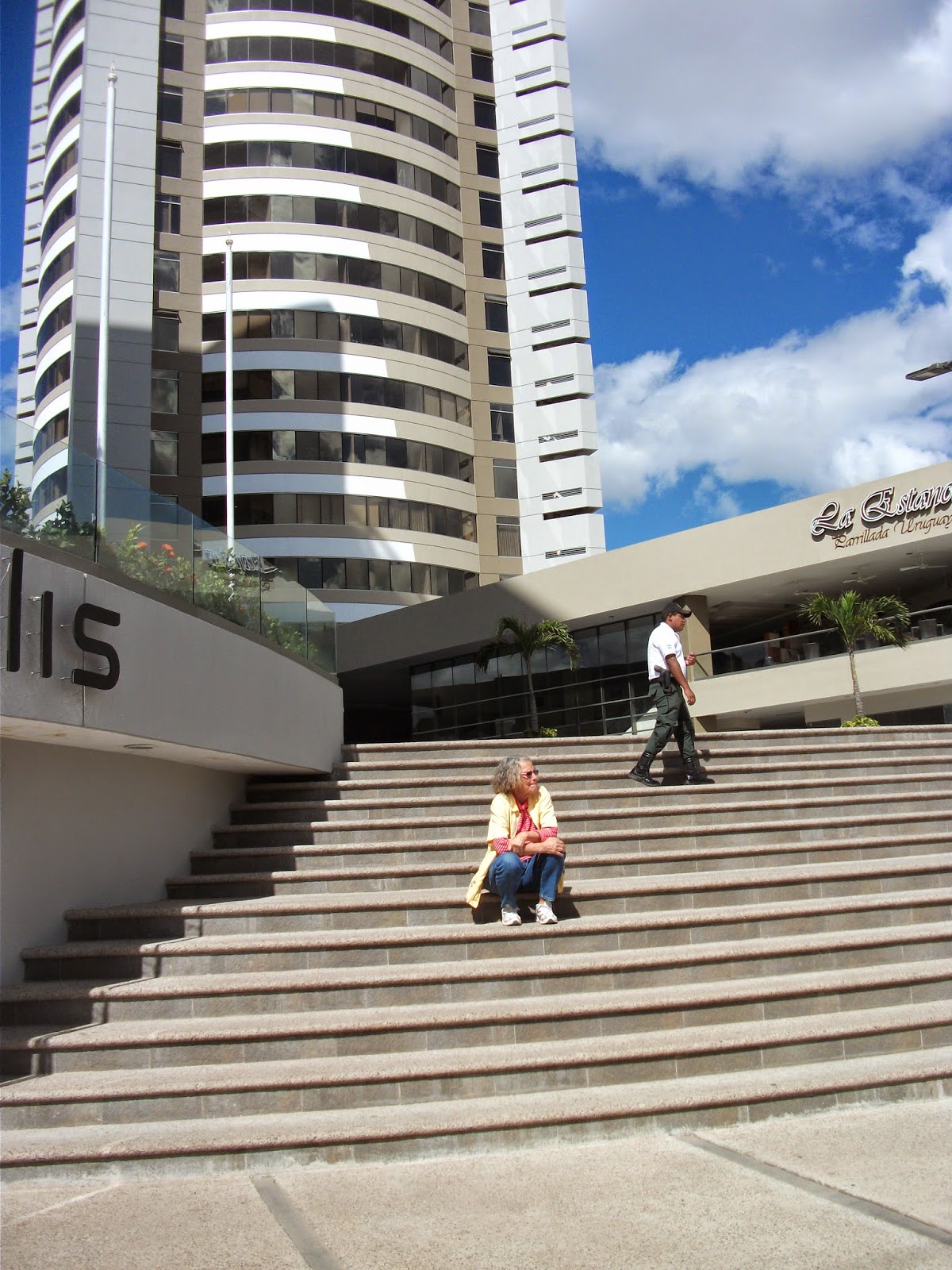


Honduras is a poor country, but giant city construction projects abound, rumored to be financed by drug money. That includes these twin towers in Tegucigalpa, the capital, on whose steps, my friend, former Honduras PC volunteer Sandy, is sitting as a guard walks above her. A dentist we knew in the Peace Corps now has her office, as you see from the view from her window.
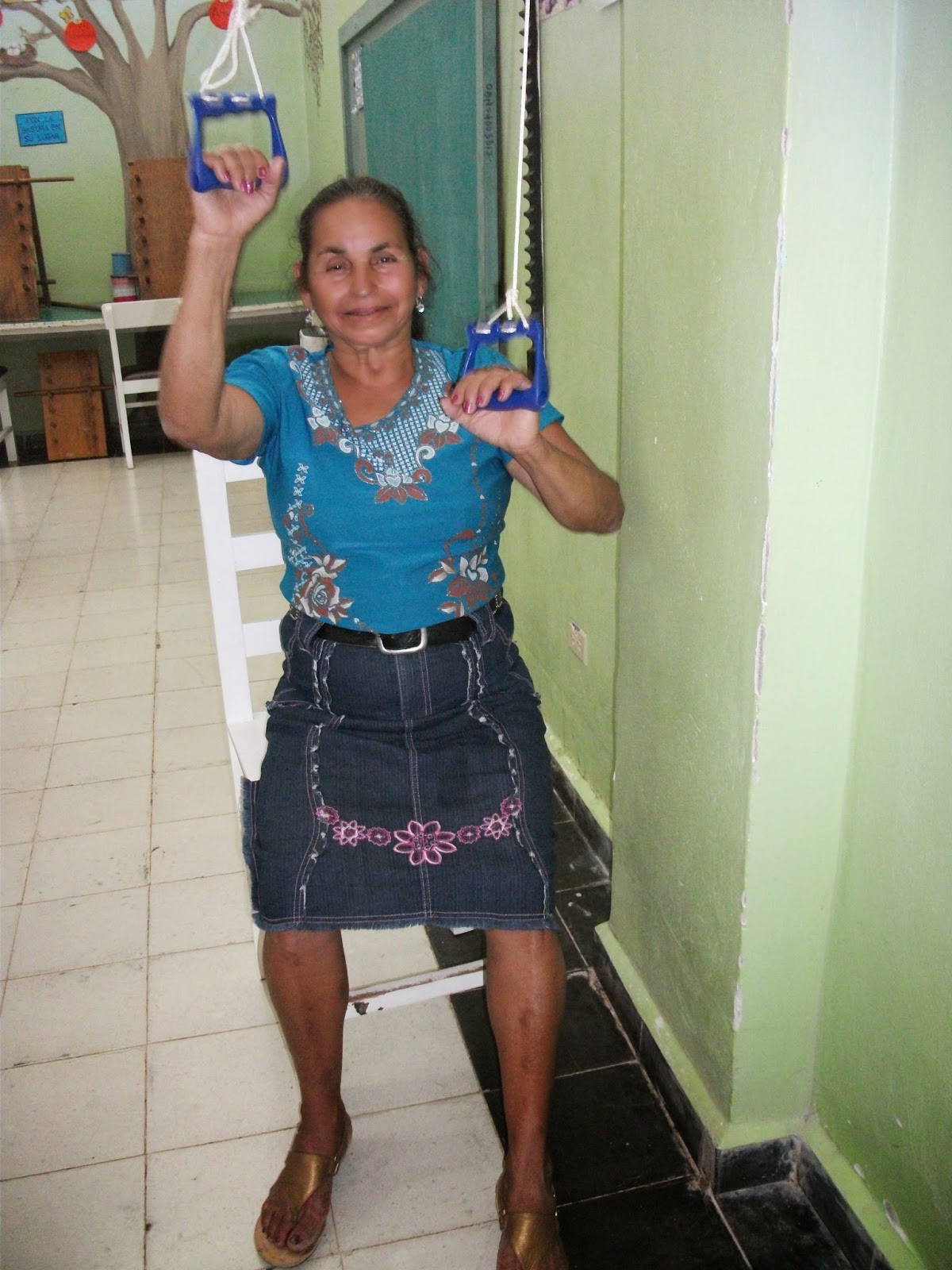
Below are photos from the Teguc residential school for blind children, beginning with a sign at the corner warning that blind pedestrians are crossing. While I was allowed to meet and greet students there, as before, I was no longer welcome to actually stay there while volunteering with Operation Smile (Operacion Sonrisa) at the San Felipe public hospital across the street. Now I see that a second-story Ferris wheel has appeared first, also photos from the occupational therapy department at San Felipe Hospital, where I always take a few therapy items. A relative of one of the therapists is taking a rest there with her child. While therapy was ongoing, a TV set blared news and film footage of bank robbers who entered with a man in a wheelchair hiding hidden guns. But, they were captured. The boy with his mother in a pink headscarf and dress is a member of the Lenca indigenous tribe living around La Esperanza, getting therapy for paralysis due to Guillain Barre Syndrome. The older woman shown with her son is an 87-year-old stroke survivor. Readers, I am not sure about the best way to combine text and photos into a seamless whole, so please bear with me.



This next set of photos shows typical recycled American school buses, one of which I took to Santa Lucia, where my old friend Irma, adoptive daughter of Pilar Salinas, the blind founder of the residential school depicted just above, now is concerned exclusively with the residential center for blind adults, having been ousted from the school for kids that her mother founded. Although the buses may look like school buses from the outside, their inside decorations are whimsical and some times include religious exhortations, such as seen below: "God guide my path," and "Confide in God." The final bus photos show vendors who typically get on and off buses, selling their wares. I bought a baby coconut (with a straw to suck the milk) from the vendor getting ready to get off the bus with his bag of coconuts. The girl is selling what looks like peeled fruit. Many patent medicine salespeople give their spiels, often interspersed with biblical passages and apologies for interrupting passengers' sleep or conversations. As outlandish as the claims are for their substances, guaranteed to cure any imaginable malady, there are always gullible buyers.
On the bus to Santa Lucia, about an hour away, I met a former Honduras PC volunteer, Luis Velez, who served from 1994-1997, married a Honduran woman, had a son, and never went home. He was born in NYC of Puerto Rican parents and now teaches English in a Teguc private school--an English teacher actually fluent in English.But its hard to carry on a conversation in a bus because of the earsplitting music over which the vendors must shout.
Following that are photos at the adult blind center where students are making plans and learning Braille and also how to clean floors, but in unlighted rooms, so I didn't know exactly where to point my camera. The final shot below is of a student talking with my friend, Irma, the director. She has initiated a lawsuit to regain control of the kids' school also, as she doesn't think that program is being run well. However, my assessment is that she will not win her suit and the more time that goes by, the less likely she is to prevail.


Next, will try to post Operation Smile photos. Lets' see what happens.
It looks like they are where they are supposed to be. First is the notice over the hospital entrance, then 2 successful child patients from a clinic next door, then all those gathered for surgery. The latter include many kids coming for second operations. One is a 16-year-old mother coming from a distance with her first baby with a severe cleft and palate problem. He is small because it is hard to get such kids to feed when they are unable to suck. The baby I saw at his birth last year died probably from malnutrition, after being asked to come back for corrective surgery when he was better nourished. I was unable the single mother of two boys with spina bifida, one with a pressure sore, whom I had met in the village of Jesus de Otoro in 2013. Her front door was always shut and locked, so I fear the worst may have happened to her older son with the pressure sore.


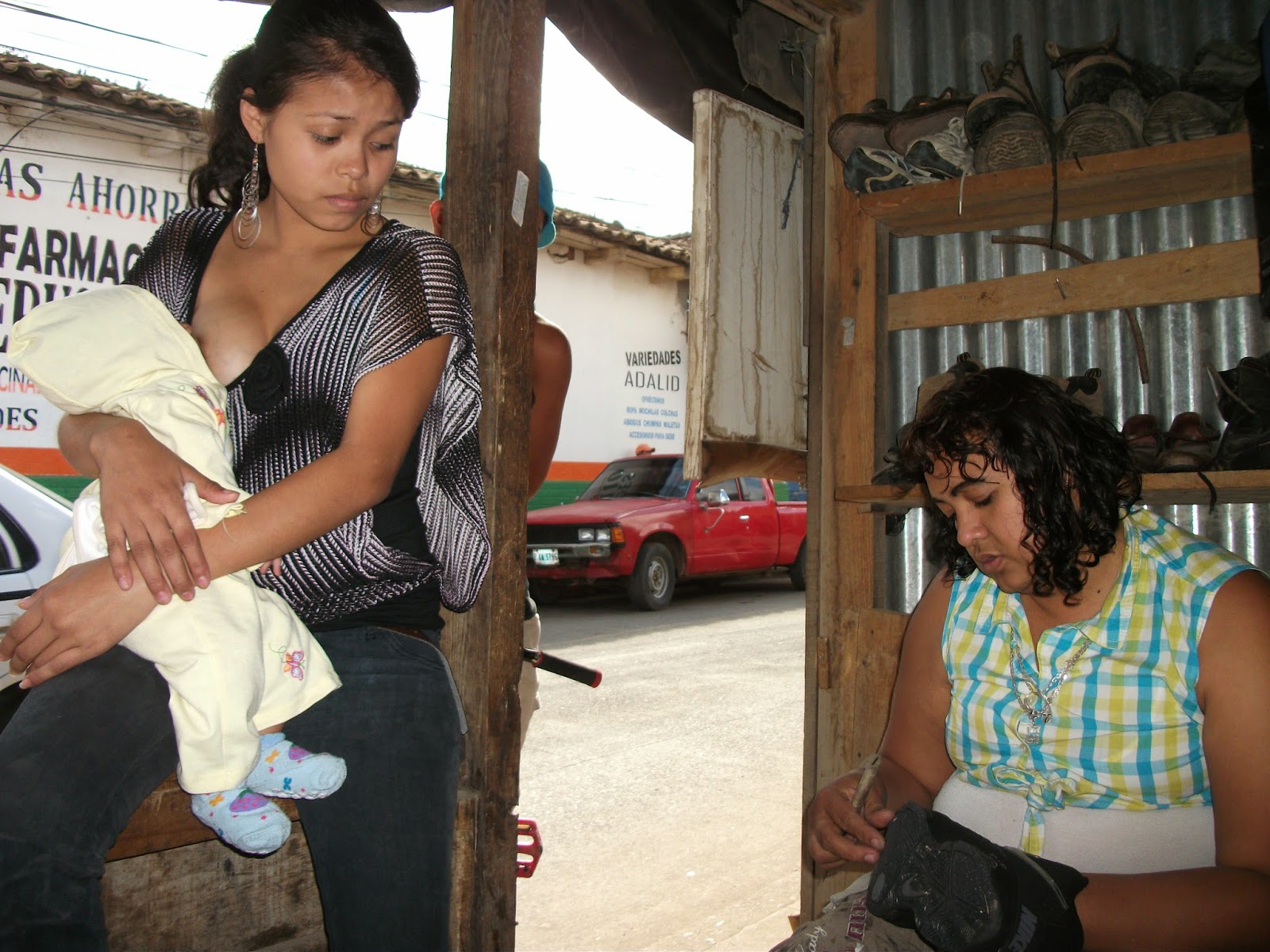
Below are scenes from La Esperanza, beginning with a woman cobbler fixing my sandal while I waited. Her daughter-in-law is nursing her baby in the shop.
Next are 2 of Dona Chunga's 13 children, each with one of their own kids. Chunga has about 30 grandchildren and 5 great-grandchildren so far.


Here below is my nursing school student, Elvir Gomez, from a poor peasant family living in the mountains. whom I am helping with his tuition. He is the oldest of 7 children and the older brother of Sandra, who I had to take twice to an orthopedic brigade before her leg tumor was eradicated. She appears in my Honduras book. Her surgeries prompted her brother to want to study nursing. His teachers say he is doing well, especially this year, when there is less book learning and more hands-on work with patients.


A plethora of cats in one household where I stayed. What is this family going to do when these cats grow up and start having kittens themselves. I was told that the cats kill mice and rats, but surely there's a limit! The dead animal below is a possum dispatched by a machete after being found in the vicinity of the poultry. Dogs were also plentiful and one jumped on me, but was pulled off by the daughter of Luis, my officemate in La Esperanza when I was in the PC there.


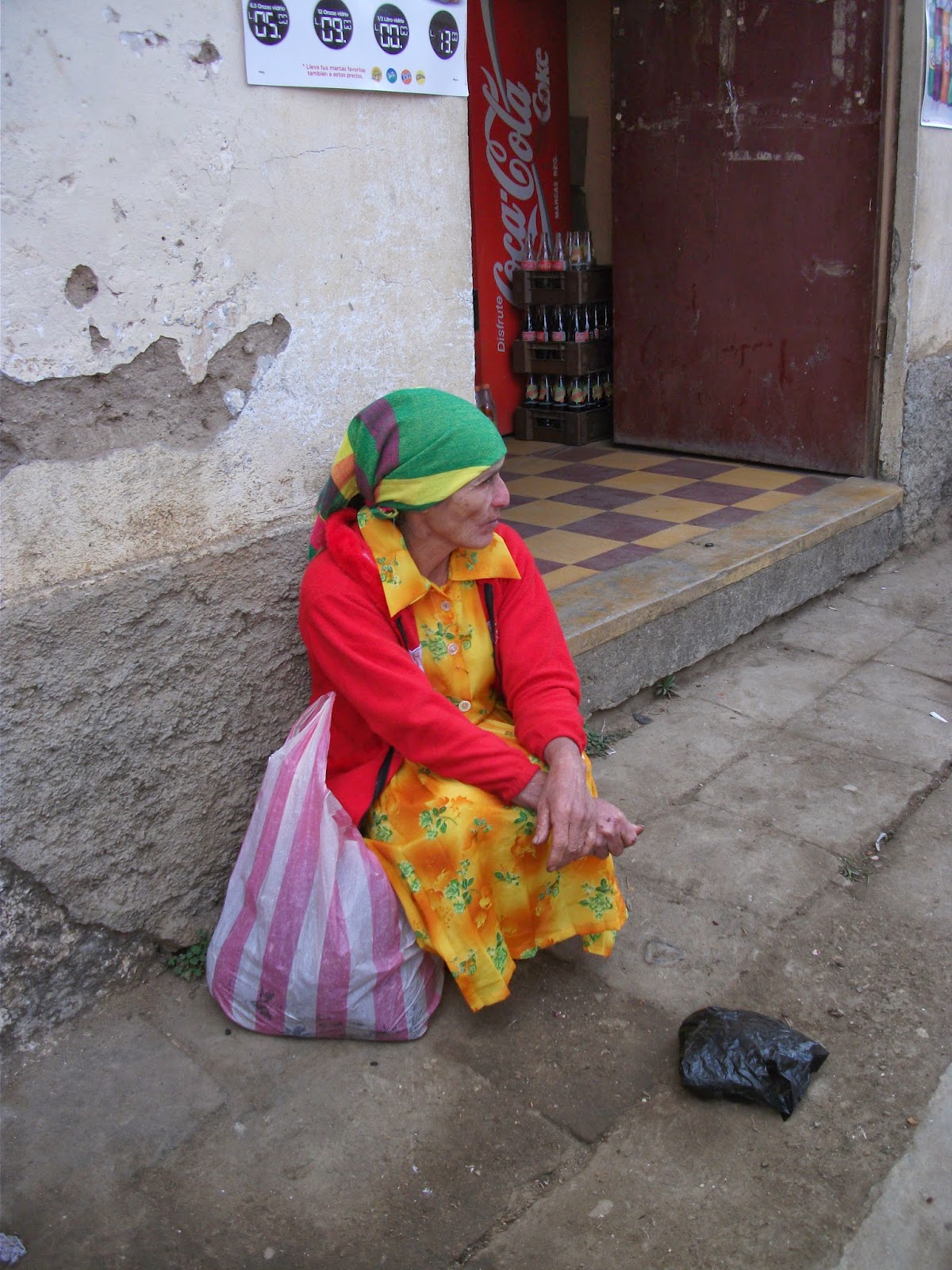
La Esperanza street scenes follow, including of a man who tried to block my camera with his hand, but the woman I was photographing said it was OK.




This is how poinsettias grow naturally. Flowers bloom all year in La Esperanza. One of hostess's maid sweeps the street in front of their house every morning.


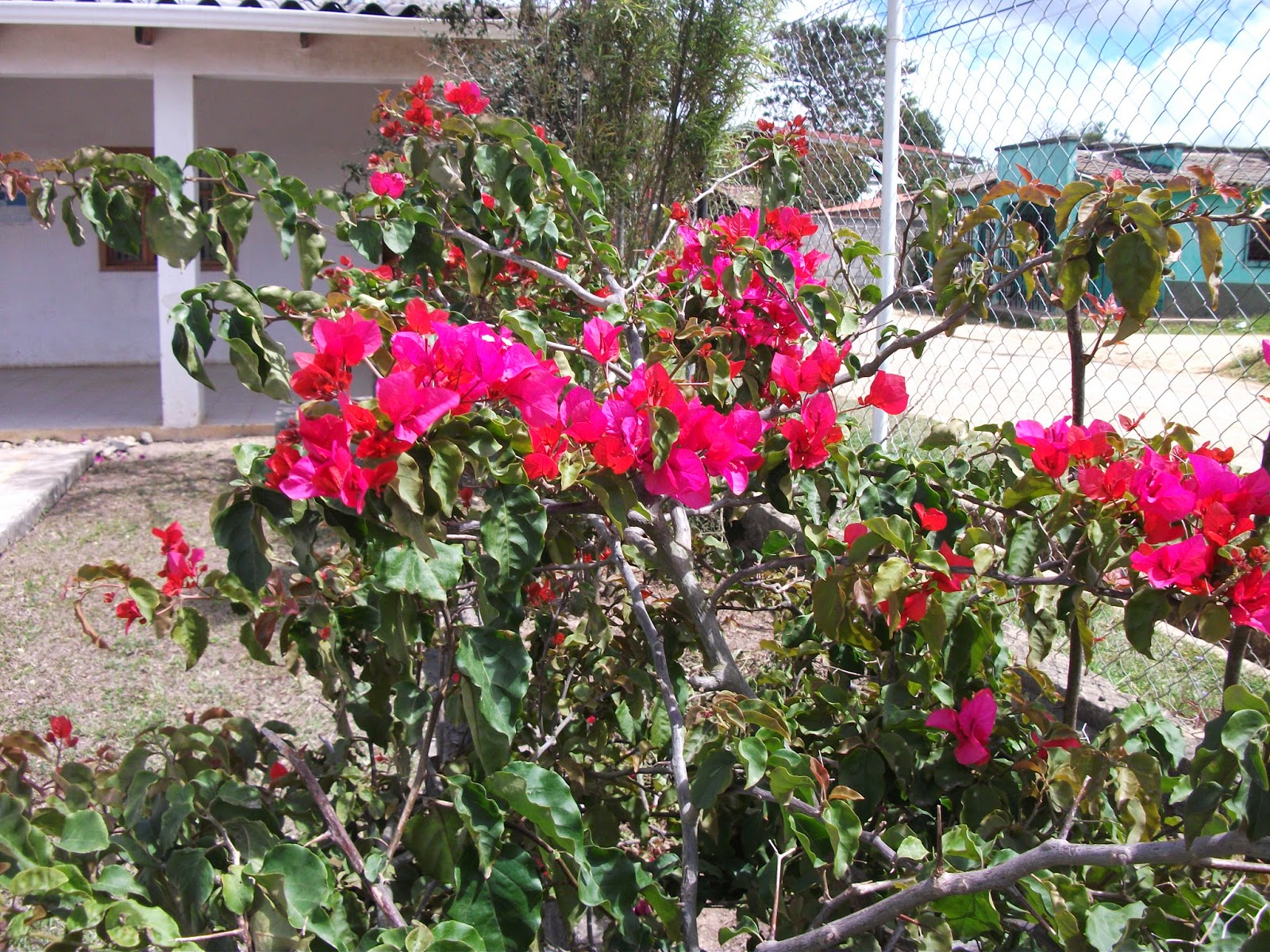


The street is a daily marketplace. The once picturesque but bumpy cobblestone streets have all been replaced with smoother material.


Below are middle-class Esperanza teens meeting in a family home.

This is the 17-year-old live-in maid in Luis and Wendy's household, one of the places I stayed in La Esperanza.


Papayas not quite ripe.

More Esperanza street scenes, including of the usual inebriated guys below.


Household maid eats dinner with the family below. Wife/mother Wendy, a nurse, was stabbed twice in the neck in December in the La Esperanza after she gave up her purse. She was hospitalized for a week after considerable blood loss, though an artery was not cut.

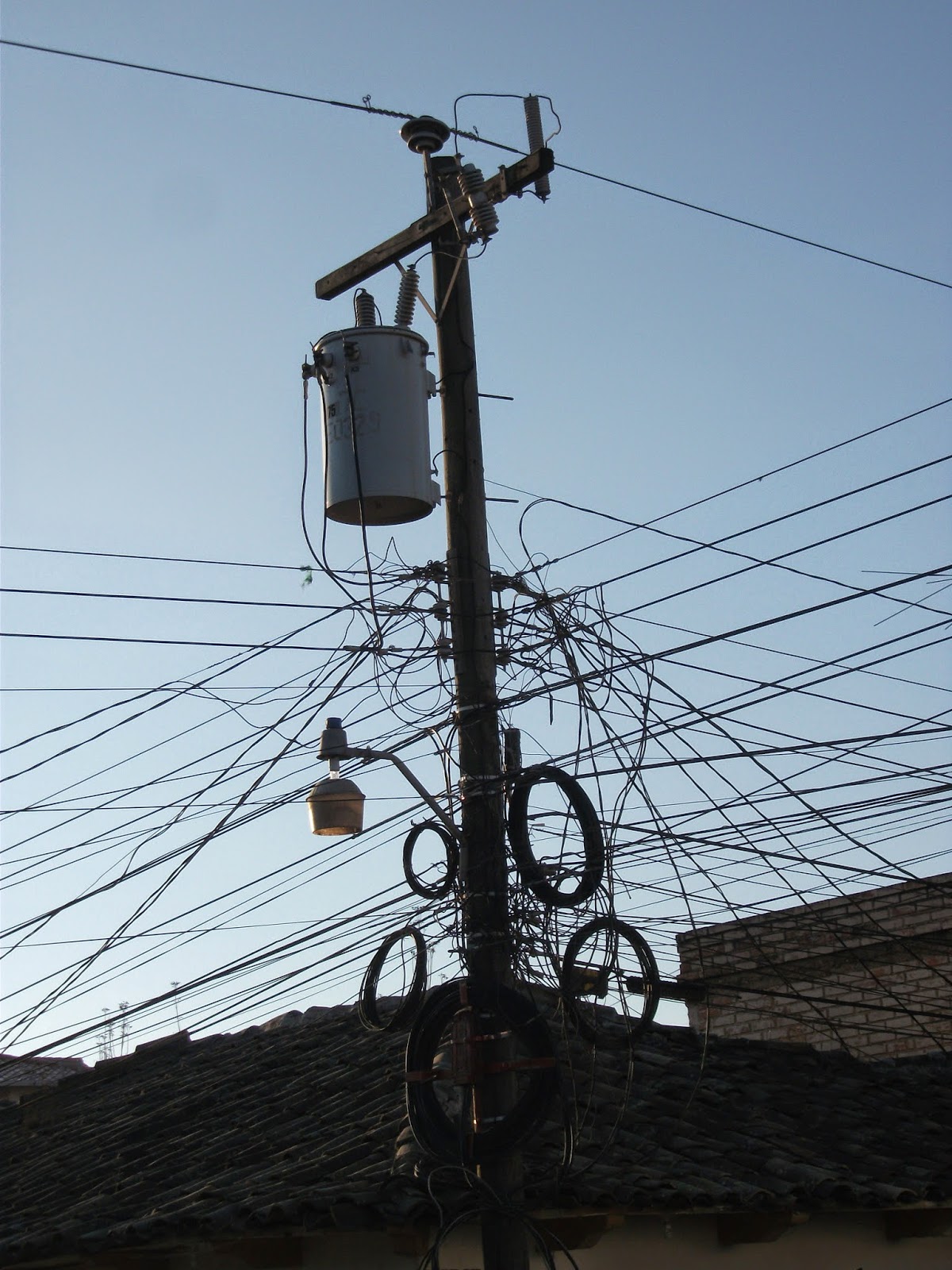
Light switches such as this below are cause for concern. Most people do their own wiring.

I've always found Honduran refrigerators and food shelves baffling.


Below, Esperanza cathedral, built in the 1600s, if I recall correctly.



Here below, IHS (ihsmn.org) volunteer medical brigade to village of Ojo de Agua, where the regular visiting physician is a Cuban who defected 10 years ago while on a medical mission, married a Honduran, and never looked back. We used a local clinic vacated for our use as the new Honduran president no longer allows us to meet in school classrooms.


Do you recognize Yours Truly below?


This young Honduran dentist told me she has been robbed twice at gunpoint in her hometown of Comayagua. She could only pull teeth, as we lacked other facilities.


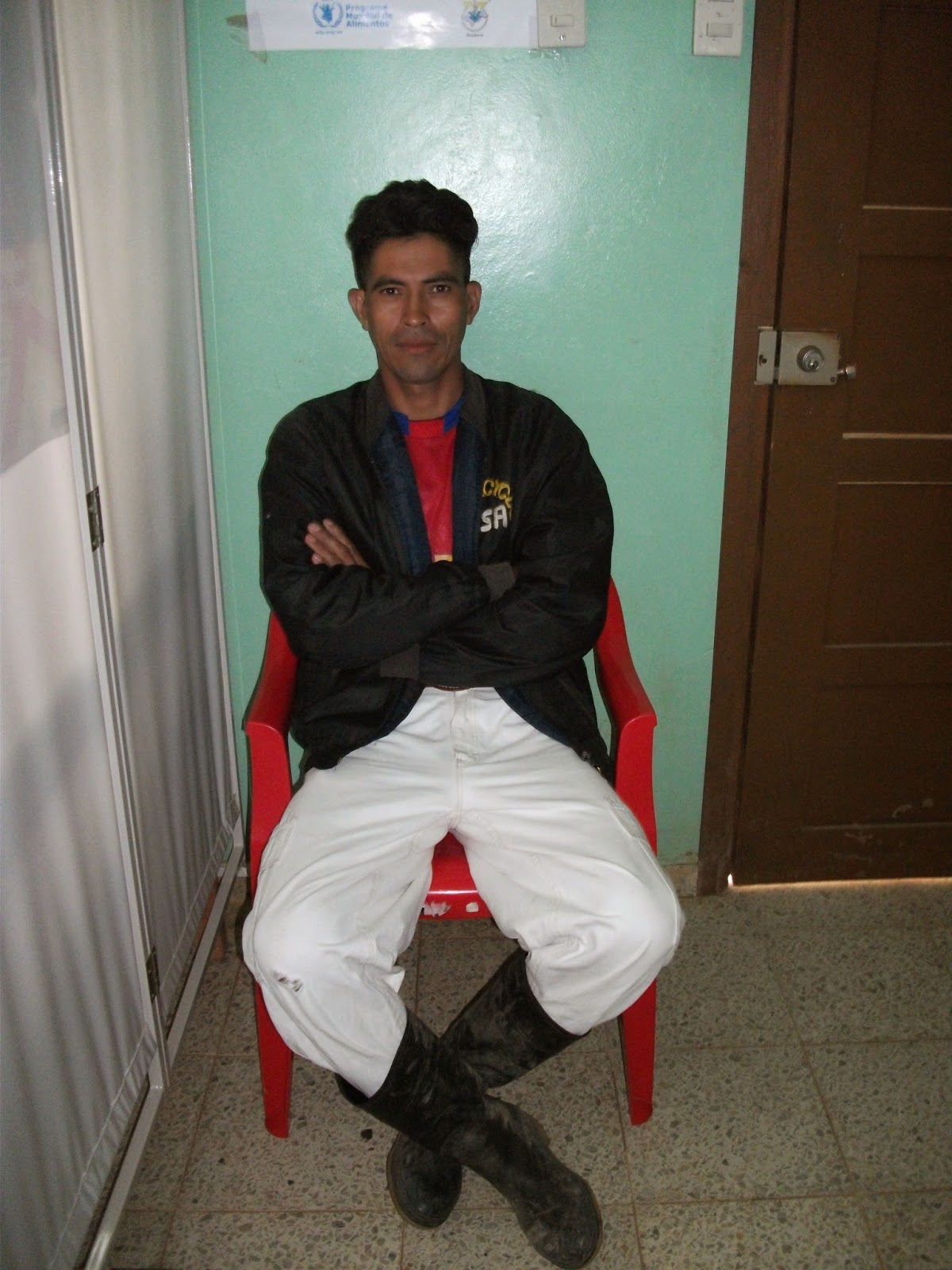

Headscarf indicates that this mother belongs to the Lenca tribe.


We made this dental patient below lie still for several hours biting down on gauze as she suffered from excessive bleeding after tooth extraction, indicating a lack of iron.


Below, you know who.


School kids lining up outside our clinic.


Here I am again with a curious baby.


Below, a blind woman with her daughter and a homemade cane.


Red TV dish on a residence. Below, girl rakes coffee beans drying in the sun.


I envy Honduran women's long, full hair.

Pharmacy student explains medications. Students get credit for participating in medical brigades.

Below: autoclaving our dental instruments at each day's end.


