Monday, January 27, 2014

Mini-Honduras Peace Corps Reunion, Artic Vortex Returns, My Niece at Site of Md. Mall Shooting, Honduras News, Bloodbath in North Korea


A surprise visit from California from Perth, one of my former Honduras Peace Corps colleagues, was the occasion for a reunion with still another Honduras volunteer, Lourdes, who came with her young son to meet us at the neighborhood Eastern Market, where the above photo was taken inside. Perth was not well-clothed for the weather, but put on as many layers as she could.

 
Still another artic vortex is now threatening to assault us. I don’t remember ever experiencing such repeatedly cold temperatures in DC since moving here in 1969. This time, walking gingerly on an icy sidewalk, my foot slid right out from under me and I fell down hard, experiencing some strains and bruises, but nothing drastic. Makes me seriously consider moving to Hawaii near my kids living there! At least in Honduras, where I will be going soon, even in the colder parts, it’s never nearly as cold as here in DC. Of course, they don’t have indoor heat, so even 40 F can feel fairly frigid inside. Last year, at night it went down to the 30s F in La Esperanza and I had trouble sleeping even wearing all my clothes and with blankets on top. Just now, I looked at the Esperanza weather report showing a high temp in the low 70s, very nice, and in Choluteca, it was predicted to reach 98 F.

 
Three dead on Saturday in a shooting in Maryland’s Columbia Mall, in a quiet planned suburban community outside Washington, DC. Surely the second amendment doesn’t prevent background checks and other commonsense measures that would protect us all when we go out in public places, though that’s considered a slippery slope by gun-rights’ advocates. I can only hope that the slope does get a lot slipperier. My great-niece Morgan, a college student with a part-time job at the mall, was there when the shooting started and was locked down, but not injured. That’s a little too close for comfort.

 The United States has seen a recent rash of shootings and gun killings at schools and colleges, as well as in homes and workplaces. The Navy Yard, thought to be a secure military campus located in walking distance from my house, was the scene of a mass shooting just a few months ago. Of course, part of our increased sensitivity to these events is due to instant communication and the 24-hour new cycle. Many seem to be vendettas for perceived slights. Others may be perpetrated by individuals with mental aberrations. Whatever the circumstances, it is high time for greater control of access to firearms, including registration and background checks for buyers, something that apparently a majority of Americans support. The right to bear arms shouldn’t trump every other right, including the right to life. A fanatical minority of gun-rights advocates is holding the rest of us hostage and threatening our very lives by fighting to prevent any curbs on gun ownership and use. Responsible gun owners don’t object to some curbs—in fact, apparently even a majority of NRA members don’t object to registration and background checks. The actions of a few are giving most gun owners a bad name.

 
A Spanish-speaking nun at a local hospital has asked me to lead a support group for Spanish-speaking bereaved mothers. Despite being way overcommitted, I couldn't say "no."

 I'm very glad for a ceasefire in South Sudan, though I don't think the rift that led to fighting has been solved.

 
I’m getting excited and also a bit nervous about my upcoming trip to Honduras, about which you will read on this blog on my return. My schedule there is very tight and transportation is difficult and somewhat risky. However, I am scheduled to participate in two medical brigades, IHS (ihsmn.org) and Operation Smile, along with a number of other commitments.

 
One reader has commented regarding the Honduras presidential inauguration announcement below:

“...wish we'd boycott this on the basis of their nonfunctional government, nonexistent civil society.”

 
President Barack Obama announced the designation of a Presidential Delegation to Honduras to attend the inauguration of His Excellency, Juan Orlando Hernández Alvarado, President-elect of the Republic of Honduras. 

 The Honorable Thomas E. Perez, Secretary of Labor, will lead the delegation.

The Honorable Lisa Kubiske, United States Ambassador to the Republic of Honduras

The Honorable Roberta S. Jacobson, Assistant Secretary of State for Western Hemisphere Affairs

The Honorable Ricardo Zuniga, Special Assistant to the President and Senior Director for Western Hemisphere Affairs, NSC staff

 
According to our local Spanish-language press, Honduran president-elect Hernández is going to take a page from the neighboring president of Guatemala to launch a program to reduce malnutrition, especially among children.

 An article about the challenges and failures of the drug war in the eastern Mosquitia region of Honduras appears in the January 6 issue of the New Yorker, “A Mission Gone Wrong.” The region is a wild jungle area with few roads, making surveillance difficult. The article’s author mentions young men paralyzed from deep-water diving without gear. I’ve met some of them, young lobster and pearl divers who surfaced too fast being fitted for donated wheelchairs. I’ve also heard them speak the Miskito language, which I can’t understand.
 
It’s mind-boggling to consider that North Korea’s current young leader, Kim Yong-Un, is even more blood-thirsty than his father and grandfather before him, reportedly not only having executed his uncle, once his key advisor, but the man’s entire extended family, including children. One of those eliminated was North Korea’s ambassador to Cuba, who had been ordered to return home for consultations. It’s even speculated that the young leader killed his father’s sister, his own “blood” relative married to the executed uncle.


Thursday, January 16, 2014

Name Correction, Old Man Winter, Pending Honduras Trip, Another Honduras HR Issue, South Sudan, DR Citizenship, Uighurs at G’mo, Hague Adoption Treaty, “Big Data” & Human Rights, Snowden Deal? Gates et al., Google Creates Problems Accessing this Account!


Correction: it was not General Mills’ Marjorie Merriweather Post herself who was found stabbed to death in her luxury Honduras spa, it was her heiress and descendant, Nedenia Post Dye. Sorry about that. An alert reader corrected me. Thanks very much.

 Snow at last in downtown DC (seen above through a screen door). Also, we experienced the “polar or artic vortex” with record low temperatures, 7 F one night. If it’s gotten that low in my more than 40 years in DC, I don’t remember it. Old Man Winter has suddenly arrived with a vengeance. Where is global warming when we need it? But even at those bone-chilling temperatures, sunlight coming through window glass still warms. Fortunately, it only lasted a couple of days.

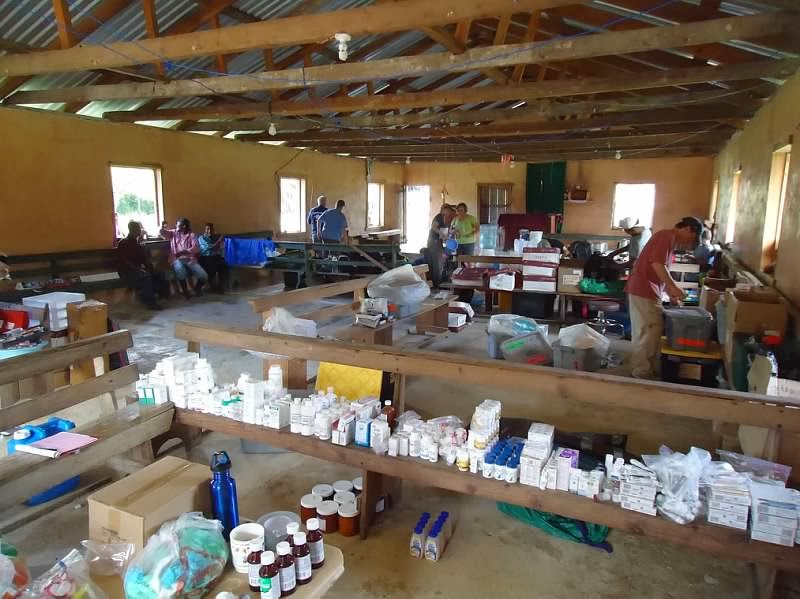
 It’s official, I will be participating in Feb. in Operation Smile and International Health Service (IHS) (ihsmn.org) medical brigades in Honduras, as well as other Honduras projects. My plane tickets are ordered and I am working out the itinerary.  The murder of a General Mills heiress in Roatan, one of the northern tourist islands last month did give me cause to pause, but I was already pretty committed.  I just play it year to year.  Much of what appears in this blog posting is derived from other sources, all of which have resonance and connections with me. Above are 2 photos from another recent IHS medical brigade, but in a tropical part of Honduras, not in the misty mountains where I'll be serving. The interior shot of an IHS pharmacy and a clinic area beyond, in a temporarily evacuated school buildings, is pretty typical of where we work.  

 This below from the Center for Economic Policy and Research. Jan. 3, 2014:

Colonel German Alfaro, the commander of Operation Xatruch III in Honduras’ Aguan Valley, personally denounced Annie Bird, co-director of the U.S. and Canada-based human rights NGO Rights Action, on TV and radio, alleging among other things that she is engaging in “destabilization work” in the Aguan. The accusations, which were also covered in La Tribuna and Tiempo newspapers, came just after Bird accompanied campesinos in the Aguan to the Attorney General’s office to file human rights complaints, including some against Honduran soldiers. Alfaro also said he was opening an investigation into Bird’s activities.

 In response, Human Rights Watch (HRW) issued a statement condemning Alfaro's accusations. This was followed by a statement today signed by representatives of 33 human rights, labor, faith-based and other organizations.

 
I'm heartsick personally right now about the continuing conflict and power struggle in South Sudan, where I was in 2006 on behalf of a US charity. That very impoverished and war-torn country finally achieved independence from the north in 2011 and already there is infighting, apparently based on tribal loyalties, and neither side wants to yield anything. It's a country without roads, infrastructure, and sufficient water--also with destruction from wars with the north and landmines all over and lots of AK-47s everywhere. Guys who are armed and used to fighting don't seem ready to convert to a more peaceful existence.  And tribal loyalties and rivalries trump those to the new nation. I hope there won’t be the type of to-the-death ethnic conflict we saw in the Rwandan genocide.

 
Here’s an e-mail I just got from Phanuel, a young Kenyan man with whom I worked in South Sudan       in 2006, before it became a country. Until very recently, he has been on the front lines there:

Hi Barbara 

I am out of South Sudan due to the situation there and currently job searching as things there are not stable and not sure if we may go back soon.

It’s sad as conflict between presidential guards led to all the chaos currently being witnessed now. The situation is bleak as the US embassy is evacuating all consulate staff and that doesn't sound promising at all.

We are currently trying to monitor events with hope that all improves.
Best wishes for the new year.
Kisses

More below on DR citizenship problem:

Last week, we had another conference call with our headquarters in London and Amnesty Int'l members around the world on what to do about a recent DR high court decree that essentially revokes the citizenship of all arrivals since 1929 and their descendants, leaving them stateless—I’ve mentioned this before, but the problem continues and has become more serious, causing panic among Haitian descendants born in the DR. Of course, defenders of the decree would say their citizenship was not revoked--rather, they never had it to begin with. Certainly, there is considerable and long-running animosity against people of Haitian descent in the DR and, with all the calamities in Haiti, they continuing coming across the border. Although the DR is much better off than Haiti, it's hardly equipped to handle the influx, although Haitians do take on the most onerous jobs in construction and agriculture. Obviously, the DR president and/or parliament could soften the impact of the court ruling or even overrule it, but with so much public support in favor of it, would they do so? This has been a long-simmering problem in the DR, sort of like many Americans' negative attitudes toward Hispanic "illegals." We in Amnesty will try to add our efforts to the chorus of opposition outside the DR. At least, Dominicans in this country have united in solidarity with the Haitian diaspora against the decree and the Catholic church hierarchy has spoken out against it.

Boston, Mass., Jan 3, 2014 / 01:04 am (CNA/EWTN News).- Cardinal Sean P. O’Malley of Boston is lamenting a court ruling in the Dominican Republic that retroactively strips away citizenship from any person born after 1929 to parents without Dominican ancestry.

“It is the destiny of the Dominican and Haitian peoples to share an island,” Cardinal O’Malley said in a letter last month to the Dominican ambassador to the United States, Anibal de Castro. “Events of history have left their scars, but I believe that Dominicans and Haitians of goodwill long for a future of greater solidarity and friendship.”

“Please communicate to your government the concerns and disappointment of a priest who considers himself a friend to the people of the Dominican Republic,” the cardinal said.

His letter came in response to the Dominican Republic’s Constitutional Court ruling that the children of undocumented immigrants who were born in the country beginning in 1929 and who are registered as Dominican citizens will lose their status because their parents were “in transit” in the country.  The court’s decision could affect some 200,000 Dominicans of Haitian descent, including many who have had no ties with Haiti for generations.

The last three Uighurs have been released from Guantanamo to Slovakia after a decade. Those guys should never have been there in the first place as, although they opposed the ethnic targeting and eradication policies of the Chinese government, they never posed any remote threat to the US as far as I know. Slovakia may not have been their preferred destination, but it’s better than being in prison and from there, maybe they can move elsewhere. They were among 22 Uighurs originally sent to G’tmo for reasons unknown, except for perhaps being in the wrong place at the wrong time. Efforts to resettle them in the US were met with resistance from some Republicans in Congress and some uninformed members of the public, who lumped them in with “terrorists.” They may be Muslim, but they have not been terrorists, even though in 2013, while they were locked away, some other Uighurs apparently perpetrated a suicide attack in Tiananmen Square. A number of Uighurs already live in the US, among them Uighur leader and former Amnesty International prisoner of conscience, Rebiya Kadeer, a small woman in her 60s with a thick gray braid, whom I once met a regional conference.

 Below is part of an article about problems with the Hague treaty on inter-country adoptions whose development I’ve followed as an inter-country adoptive parent, also a board member of Holy Cross, an international adoption agency. Our agency opted out of the Hague treaty because it was just much too complicated, the costs were exorbitant, and we didn’t see how it was helping kids. A Hague rep had to come and spend several days annually with all expenses paid at a costly hotel plus a hefty per diem to review the files of our small agency. It was too much work and too much money, for what? To give that person a self-important and cushy job? The result, while it might have provided some additional safeguards for adopted children, has ended up stymying adoptions, which was not its original intent. I’m not prone to blame “big government” bureaucracies, but this is one that hurts more than it helps.  So, I would support Senator Landrieu’s efforts, as long as they don’t make the bureaucracy worse. She seems to be trying to get international adoptions to become the focus of a special department within the State Dept.

 
Landrieu backs bill to boost foreign adoptions

Legislation draws bipartisan support, AP, Dec. 27, 2013

  |  
Much of the impetus for Landrieu's bill stems from shifting views about the Hague Convention on Inter-Country Adoption. That treaty establishes ethical standards for international adoptions, which it says are an acceptable option after efforts have been made to have a child adopted in his or her home country. The U.S. entered into the agreement in 2008 with strong support from Landrieu and other adoption advocates who hoped it would curtail fraud and corruption, and then lead to a boom in legitimate adoptions.

 Instead, the decrease in foreign adoption by Americans — which started in 2005 — has continued. There were 8,668 such adoptions in 2012, down from 22,991 in 2004.

"When I helped to pass this treaty, it was everyone's hope that the number would go up — doubled, tripled, quadrupled," Landrieu said. "Instead it's down by 60 percent. That's the best evidence I have that what State Department has in place isn't working."

 In a recent article appearing in the SF Chronicle (Jan. 5, 2014) entitled “How big data can help secure human rights,” Amnesty Int’l USA’s Samir Goswami, managing director of the program for individuals and communities at risk, argues that:  big data can draw from information about human sentiments and actions to predict potential atrocities, reveal patterns of destructive human activities such as trafficking and help weigh prescriptive policies.

“Recently, Amnesty International USA participated in a New York City event called a ‘DataDive,’ where volunteer data scientists got together to apply their knowledge and skills to human rights data.”

The article, written with a co-author, concludes: “The ability to generate human rights information from various sources from all corners of the globe allows for an incredible technological tool that can be built with major long-term impacts. With the proper investments, understanding how data science helps human rights work can greatly add to our ability to monitor and act upon human rights risks as they emerge, and contribute to societies truly governed by the rule of law. Technology can help get us there.”

 Have heard rumors of Edward Snowden hinting at making a sort of plea bargain offer to the US government, promising not reveal any more information if he gets leniency when returning to the US. I have no idea if that’s true, but would imagine that the government would want to make a deal.

 I wonder if former Republican Defense Secretary Robert Gates wrote his tell-all book critical of the Obama administration not only to make money and get certain gripes off his chest, but, perhaps, also, to make himself a Republican presidential or VP contender—or otherwise a high official in a future Republican administration?

 
Republican noises now in support of some sort of immigration reform and for tackling growing income inequality seem to derive in part from business pressure, also from an attempt to demonstrate the bipartisanship that voters now seem to favor. Likewise, any concessions by Democrats are designed to show that they too have a bipartisan spirit.

 
One reason for such a long time between postings is that Amnesty International, where I have been a volunteer since 1981, decided to save money by closing an Earthlink account where I’d been doing Amnesty business for years. I had some files there transferred to gmail, part of the Google system, as is this blog. Somehow, without my advice or consent, or even knowledge, Google linked that account to the new gmail address and I could no longer post there. It took some time to straighten all that out, as, of course, there is no one you can communicate with directly at Google about such matters.

Sunday, December 29, 2013

Happy New Year, Peace Corps Holiday Party, Son’s Death Anniversary, Target, Honduras Killings, Wash. Post Cuba Editorial Appeal, Sudan Conflict, Mainstream Republicans Fight Back, Feb. Honduras Trip


Here in DC, snow has been predicted several times already, but the snow that has pummeled the northeast has not actually materialized here or has melted the same day. But my sister in Philly, just 3 hours north, says several inches have fallen there more than once already. A big storm was predicted for Sat. Dec. 14, but turned out to be only a light cold rain, at least in my Capitol Hill neighborhood, so did not daunt the attendance at a Peace Corps function that evening. The photo shows me at the Peace Corps holiday party held at the nearby Eastern Market. It reminded me of the Carter presidency inaugural ball that I attended years ago, a live band, but wall-to-wall people making it hard for anyone to move, much less to actually dance, though a few valiant folks tried, more or less standing and moving their feet in one place. Very few people my age were attendance and the few I talked with (shouted to) over the din were surprised to learn that I had served fairly recently—they assumed that it was years ago in my youth, like most of them. One young man had been in Cape Verde, a Portuguese-speaking African island that sounds quite idyllic. I only saw 2 people I actually knew there and none from Peace Corps Honduras.

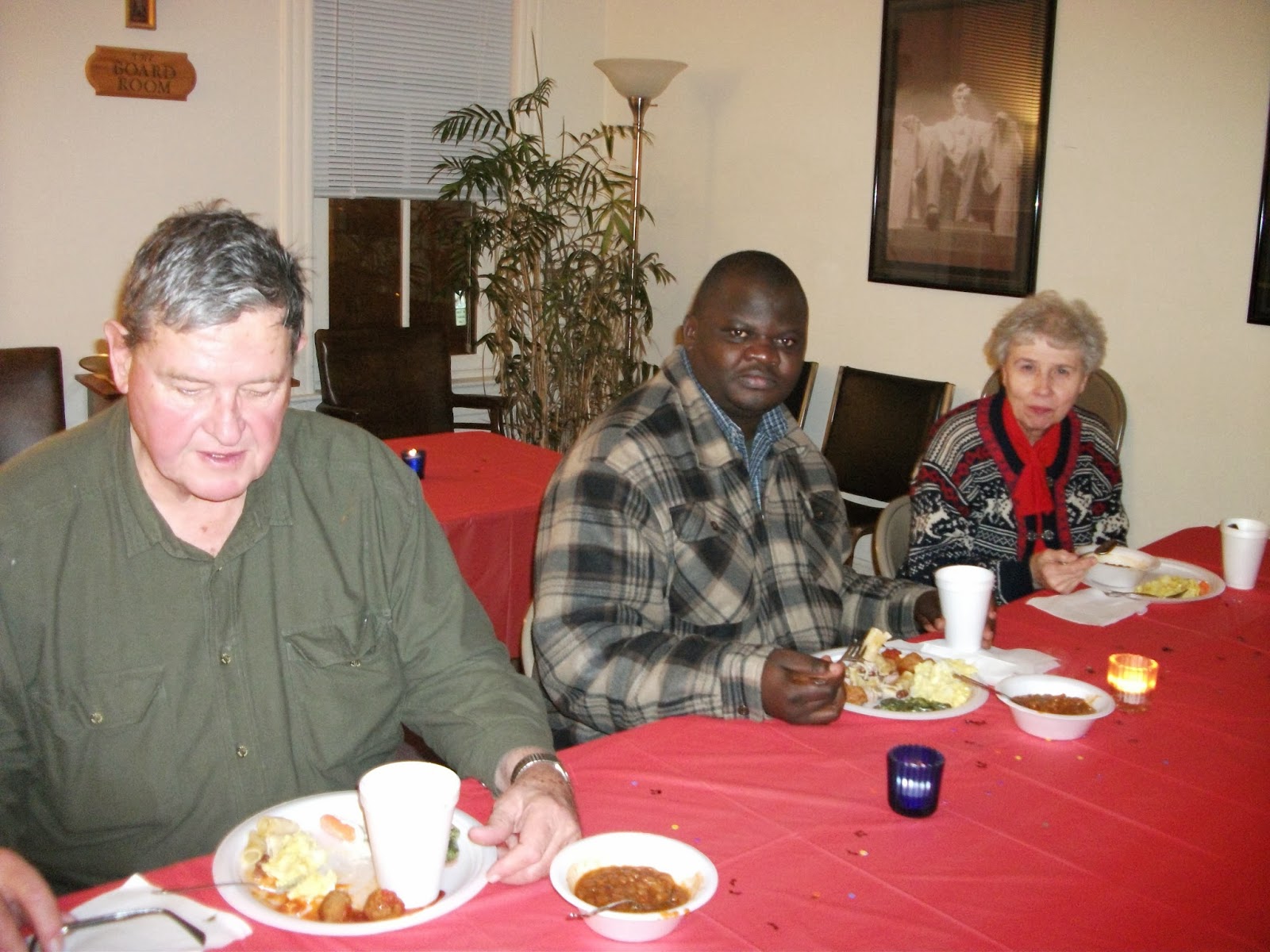
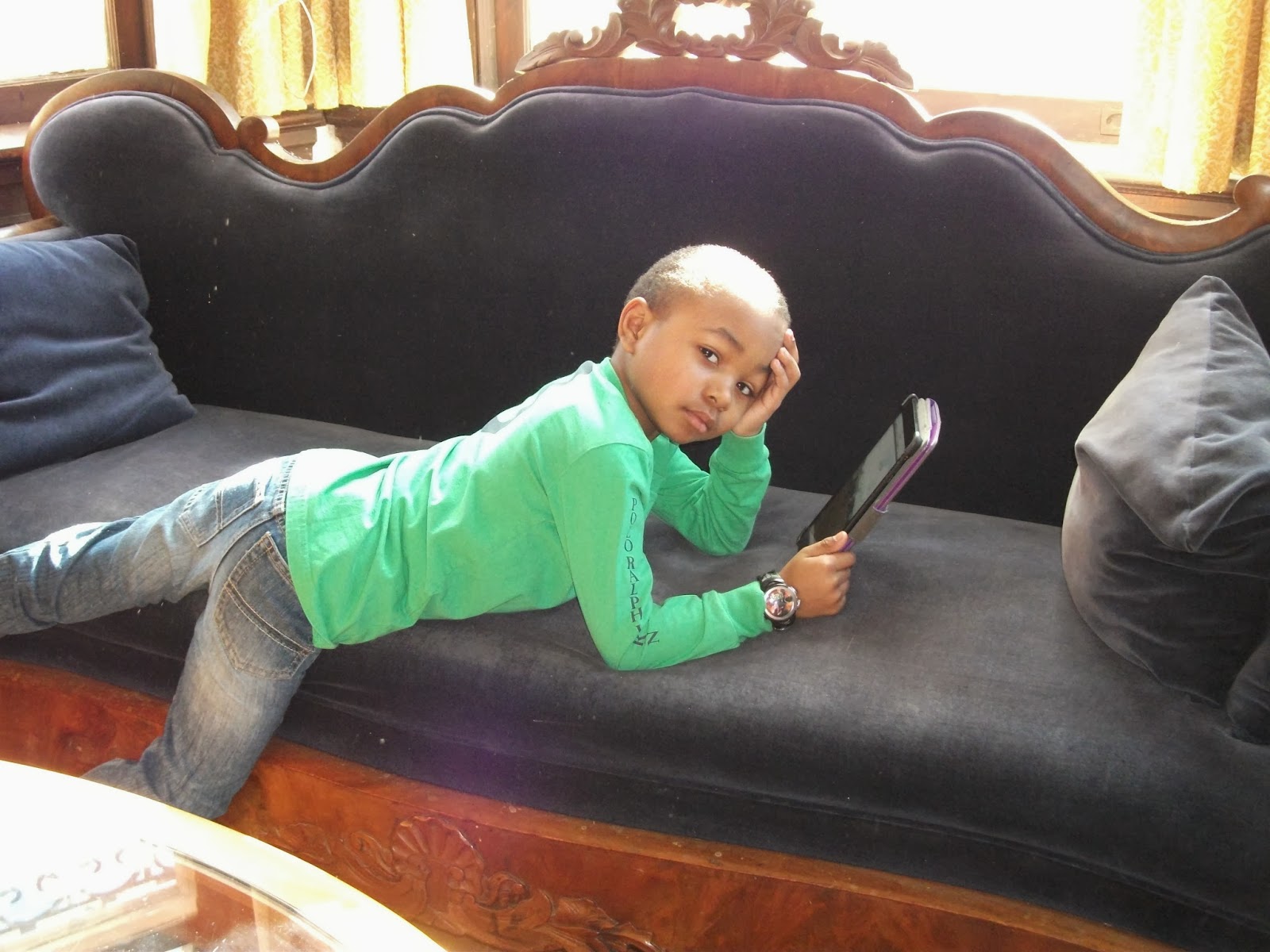
Other photos include folks attending a potluck after a Christmas Eve Mass at my local Catholic community, Communitas, and my great-grandson De'Andre, age 6, with an electronic Christmas present and helping his grandmother, my daughter Melanie, rake leaves in my backyard.

Dec. 19 was older daughter Melanie’s birthday (I won’t say her age because it makes me feel too old!), also the anniversary of older son Andrew’s death, now 19 years ago. It doesn’t seem that long. December is also the anniversary month of the death of my Cuban foster son Alex 18 years ago. Except for marking Melanie’s birth, December is not an especially festive time for our family.

 
Ordering gifts certificates for my grandson Andrew, named for his late uncle whom he never knew, now living with his mother in Texas, I ordered them from Target, his stated preference. The certificates were cancelled after the security breech there and I had to send a check instead. Target really took a beating on this at this crucial time of year, though perhaps they are at fault for their lax security—or perhaps the hackers were just one step ahead. On-line purchasing, like most things, is a two-edged sword.

 
Internet surveillance and hacking, whether done by governments or non-governmental groups, I consider a fact of life and not particularly shocking. Of course, proper safeguards should be installed to the extent feasible, but the very fact that the internet exists means that breeches will occur and I’m sure all governments try to spy on each other and that they all have to constantly fend off breaches from many sources, including from bad guys conducting cyber warfare. As individuals, organizations, and nations, we have to accept such risks in exchange for the benefits that the internet confers. At the same time, I can see why some folks I know, including my own sister, refuse to connect to the internet or use computers, though she does use a phone and is vulnerable there.

 
I must express a minor and totally useless complaint about how early darkness arrives these days, though I’m quite happy in June when the days are long. At least now, we are on the upswing.

 
News out of Honduras continues to be grim. General Mills heiress Marjorie Merriweather Post was found stabbed to death in her luxury Honduras spa on Roatan, one of the northern Caribbean islands. Her assailant was a young Honduran man whom she was apparently trying to help kick a drug habit and who claims to have been her lover, though she was some 20 years older, so that’s somewhat doubtful. He also denies killing her though he was discovered by police driving her car and covered in blood. Below is an article about a more common killing. The US State Dept. has warned travelers to Honduras about the violence there and, of course, the Peace Corps left for the same reason in early 2012.

------------------------------------------------------------------------------------------------------------------------


HONDURAN JOURNALIST SHOT AND KILLED

Amnesty International Urgent Action
Issue Date: 10 December 2013

On 7 December Honduran journalist Juan Carlos Argeñal was shot and killed by two unidentified men in his house. Honduras is an extremely dangerous country for journalists, lawyers and human rights defenders to carry out their work. A full and impartial investigation is urgently needed.

At around 3 pm on 7 December, two armed men reportedly visited Juan Carlos Argeñal’s house in Danlí, in the southern department of El Paraíso, and shot him twice. Juan Carlos Argeñal was a correspondent for both Radio Globo and Globo TV, as well as the owner of a local TV station and an activist for the Freedom and Re-foundation Party (Partido Libertad y Refundación LIBRE). In the months prior to the killing Juan Carlos Argeñal had reported about corruption in local government.
 
In July 2013 Juan Carlos Argeñal told human rights group Committee of Relatives of the Detained and Disappeared in Honduras (Comité de Familiares de Detenidos Desaparecidos en Honduras, COFADEH) that he had been intimidated because of his work. Juan Carlos Argeñal reported that he had felt pressure from local authorities who summoned him twice concerning broadcasting permits. He told COFADEH that he attended both meetings and that he feared such requests had been provoked by his journalism.
[Sorry for extra space here, cannot close it.]


President Obama should extend a hand to brave Cubans, Washington Post Editorial, Dec, 11, 2013

President Obama's homage to Nelson Mandela on Tuesday was moving and heartfelt. He celebrated a “great liberator” who demonstrated the power of words, ideals and actions to change history. But the president added an awkward footnote to his tribute in Soweto by stopping to shake hands with Raúl Castro, a man whose regime, led for a half-century by his brother Fidel, has bashed heads and broken arms to stifle freedom.
       A handshake is a gesture, in this case one freighted with symbolism that cannot be ignored. Tuesday marked the 65th anniversary of the adoption of the Universal Declaration of Human Rights by the United Nations. On the streets of Havana and other cities, a crackdown on civil society was underway. Mr. Castro’s goons showed that they have not lost their taste for violence and coercion to extinguish even the slightest protest or expression of free will.
      We called attention two days ago to the work of Antonio Rodiles, a democracy activist who announced his intention to hold a human rights conference in Havana on Tuesday. In a letter to Mr. Castro, he described a litany of harassment and abuse directed at him by Cuba’s security forces and thugs under their control, who threatened retaliation if the conference went ahead. Sure enough, the authorities followed through on their threats. The home of Mr. Rodiles was cordoned off, and most of those who came to participate in the conference were barred from entering. Then Mr. Rodiles and several colleagues were arrested Wednesday.
      According to a Reuters dispatch, about 20 members of the dissident group Ladies in White “were pounced upon and quickly shoved into waiting vehicles by security personnel and government supporters” when they arrived Tuesday at a busy Havana intersection. The Miami Herald reported that the group’s leader, Berta Soler, and her husband, former political prisoner Angel Moya, “were hauled off by plainclothes police as they headed” to the planned protest. Security officials also blocked the telephones of several dissidents in an apparent effort to silence news of other arrests. The popular blogger Yoani Sánchez tweeted Tuesday morning, “Like in a bad horror movie, I am losing communication with . . . activists.”
      Elsewhere on the island, there were reports that independent journalists, filmmakers and writers were arrested. The Herald reported that police left 16 dissidents bleeding and that six others were arrested when they raided the home of Roger Curbelo, a member of the opposition Christian Liberation Movement in the town of Puerto Padre. The movement was once led by Oswaldo Payá, the dissident who was killed last year in a suspicious car wreck.
      While Mr. Obama was shaking hands with Mr. Castro, courageous people attempting to uphold Mr. Mandela’s ideals were suffering beatings and arrests. The president ought to follow his handshake with a loud and unambiguous salute to the real champions of human rights — those fighting for it on the streets of Cuba.


Ethnic divisions in impoverished South Sudan have boiled over into an attempted coup and inter-ethnic fighting. As you know, I was there in 2006. This time, the north seems to be not to blame and the situation is fragile. The country only achieved impendence in 2011, after decades of strife with the north, amid many hopes and celebrations. Now, the State Dept. is warning American citizens not to travel to South Sudan and is evacuating those already there. I’m broken-hearted because that new country has so many problems already and doesn’t need any more war. Is it a matter of principle and issues or just a power struggle? The new nation’s former solidarity was its strength, now divided. Unity often fractures after opposition groups unite against a common foe. It has happened in Afghanistan and Syria and even happened in South Africa after Mandela’s efforts to reconcile with the apartheid regime. Many in the ANC opposed such efforts, including his then-wife, Winnie, who was also carrying on an affair with a more militant guy, leading to Mandela’s decision to divorce her. I even saw it, to my surprise, among the Mothers of the Plaza de Mayo in Argentina, two bereaved groups of mothers marching separately, one considering the other too conciliatory toward the government. While I would lean toward reconciliation in most circumstances, there is a point where principle trumps reconciliation—with every observer of a situation drawing that point at a different place. 

 
Glad that the mainstream Republican Party is finally pushing back against the teapartyers and that ordinary citizens are finding their voice. Some Republican office holders are realizing that catering to the extreme right-wing is not necessarily going to keep them in office.

 
Finally, despite the violence, I am now planning my Feb. trip to Honduras, my 10th return trip since leaving the Peace Corps. More on that later.

Thursday, December 12, 2013

Radio Interviews, DC Area PCVs, Honduran Elections, A Handshake, Africa Photo Exhibit, Dementia Upswing, Rare Illness, Fellow Catholic


OK, did this one-hour interview on Dec. 2, http://www.blogtalkradio.com/dr-jeanette-gallagher/2013/12/02/helping-others-through-the-peace-corps-at-the-age-of-62-after-loss-of-loved-ones

 On Dec. 6, was my 15-minute segment of the show that didn’t go through on Nov. 30 as previously scheduled, http://www.blogtalkradio.com/themastercommunicator/2013/12/06/the-literary-showcase-four-fabulous-female-authors

 The DC metropolitan area fell to second place in 2013 in its per capita rate of sending volunteers to the Peace Corps. DC produced 7.6 Peace Corps volunteers per 100,000 residents this year, compared to 8.1 volunteers per 100,000 residents in 2012, when the district placed first in the nation. Vermont ranked first with 7.8 volunteers per 100,000 residents.

 If my readers are following the news from Honduras, they know that there is much upheaval over the recent results of the hotly contested presidential elections in which 8 candidates were running, so whoever ran was sure to have garnered a minority of votes as the highest vote getter, not of a majority of votes, wins. As in neighboring Nicaragua, where Daniel Ortega has perpetuated an initial minority win into perpetuity by jettisoning a previous rule prohibiting consecutive terms, a minority win is not a good recipe for maintaining political stability. In both Honduras and Nicaragua, it would be better, in my opinion, to have the 2 top candidates face a run-off election, such as happens in Chile. Frankly, unlike my fellow would-be liberals, I was never an admirer of Zelaya, considering him inept, a fraud, an opportunist, and a demagogue, so would hardly have supported his wife Xiomara. But I realize that she has many ardent advocates, including the family of the young doctor called “Loni” in my book, who are her immediate relatives. Many Hondurans rightly feel the economic and political system is stacked against them—certainly there are obscene extremes of wealth and poverty, with those in poverty far outnumbering the wealthy (as in the US also). However, whether Zelaya and his wife would actually help the majority of the poor while feathering their own nest  is questionable in my view and I never considered Zelaya’s ouster a “coup,” though the action was highly irregular and the situation murky because of the lack of impeachment powers in the Honduran constitution. During his presidency, Zelaya did raise the minimum wage to something equivalent to $280 a month, which was never enforced, except among Peace Corps volunteers who argued to be included. He also got cheap oil from Venezuela, which helped everyone. However, now Venezuela is in fairly dire financial straits and unlikely to keep expanding its oil largesse. If, indeed, the US did favor or assist the winning candidate, Juan Orlando Hernandez, that was not obvious and there is no such evidence, and, nonetheless, EU observers have certified the election results, despite irregularities. As indicated, Hernandez had a substantial lead, though not a majority of all votes cast. Ortega already has called from neighboring Nicaragua to congratulate Hernandez. Doubtles Zelaya’s wife’s supporters still believe there was fraud, with Zelaya loudly denouncing the results, and the article below in the Guardian disputes the outcome—however, with much opinion and little proof, I would say. Very belatedly, am regretting not volunteering to be an election observer for this contest. I do have election observer experience (Chile, Nicaragua, Haiti, and DR) and an abiding interest about and concern for Honduras, but I was distracted by other responsibilities and just didn’t present myself beforehand. Who knows for the next presidential election in Honduras? I might be considered too old then and fear much turmoil in the meantime.


Of course, we all saw the photo of Barack Obama shaking the hand of Raul Castro at Nelson Mandela’s memorial service, apparently as he was going down a line of heads-of-state. In his later remarks, he mentioned that some in attendance at the service praised Mandela for his support of democracy and reconciliation while not observing it in governing their own people, an oblique reference to leaders such a Castro.

 
With Mandela’s death, the new film Nelson Mandela: The Long Walk to Freedom is likely to do well. South Africa is one of the country’s I hope to visit, just waiting for the opportunity to arise. I rarely travel for just a vacation, usually only when I’m invited and have a specific task. I would recommend that my readers do the same; it makes your visit so much more meaningful and memorable.

 My nostalgia for Africa was re-awakened the evening of Dec. 4 when I was invited to the opening of an archival exhibit of the Africa photos, taken over decades all over the continent, by the late photographer Eloit Elisophon, many of which appeared in National Geographic and LIFE. The exhibit appears in the Museum of African Art, but I note that the accompanying literature says that a larger archive is accessible only by appointment. The main exhibit, mounted right next to the museum shop, appears fully accessible and inviting and will keep visitors busy for quite a while. I was invited to the opening because of my hosting of fellows at the museum. Not only were African hors d’oeuvres served but we were serenaded by a hefty African wearing a cute top hat, singing and playing a large unfamiliar instrument that combined strings with a drum and bells. Two of the photographer’s daughters came from Arizona for the opening. I have only visited 3 African countries: Kenya, Morocco, and what is now South Sudan. But I have always been enthralled, perhaps because those countries were so exotic and different from what I already knew. Also, I have had visitors from Africa attending other programs and those people have always been delightful guests. Someone of Latin American heritage once told me that he had no desire to visit Africa, considering it dangerous, backward, and ruled by demagogues. All that is true to some extent, but shouldn’t keep someone from experiencing the richness and variety of that continent, which is experiencing explosive development, growth, and opportunity. And, I would say, the Peace Corps is having role in all that.

 Predictions are that worldwide dementia numbers are likely to triple by mid-century, not due primarily to overall population growth, but, rather, because of the increase in the elder population, an unfortunate side effect of extending life spans and treating formerly terminal maladies. Likewise, I suspect, the number of people living with disabilities of all types will increase, creating an extra burden for the well population, as is already happening in China, Japan, and Europe, where birthrates are below replacement. They are still at replacement in this country only because of immigration, something Republicans, especially the Tea Party wing, fail to acknowledge.

 Had a fairly young patient the other day with aplastic anemia, an uncommon but serious disease of the bone marrow and blood cells. It has multiple causes, though in many cases, the cause is unknown. My patient and his wife left their children with relatives in another state to travel to this area for the most advanced (free) treatment at the National Institutes of Health. So far, he has experienced some relief, but is not “cured.”

 Here’s an article about a member of my small Catholic community, Bill D’Antonio:

http://ncronline.org/news/people/sociologist-has-kept-his-eye-catho

Saturday, November 30, 2013

First Blog Radio Show Postponed

Sorry folks, my radio show today didn't go through. Below is a message from the host.
The program is entitled http://www.blogtalkradio.com/themastercommunicator/2013/11/30/the-literary-showcase-featuring-four-fabulous-females.

Producer's message:

Unfortunately, BlogTalk Radio is having technical difficulties this morning. The show was scheduled properly but I was unable to get into the studio for some reason beyond my comprehension. I will reschedule the show for Thursday evening at 7:00 pm (CST). Does that work for you? Please accept my sincere apologies for any inconvenience. Sharon

Friday, November 29, 2013

More on Radio Shows, AIDS Day Dec. 1


Date/Time: _November 30, 2013___, 9:00 a.m. (CST), 10:00 a.m. (EST)


On Monday, Dec. 2, at 6 pm EST, I’ll be on Dr. Jeanette Gallagher’s hour-long blog radio program, a call-in program at (424) 258-9318, where you may call in anytime during the whole hour. Here’s the link:


Reminding everybody that Sunday, Dec. 1, is international AIDS Day. When I was in Honduras, we always scheduled special activities for AIDS Day, including outdoor AIDS information skits performed by teens and a march through town carrying a homemade AIDS Day banner. New AIDS infections have been reduced dramatically worldwide. In 2012, the last year where figures are available, there were still 2.3 million new infections, including 260,000 among children. Some 35.3 million were living with AIDS, many thanks to antiretroviral drugs, and 1.6 million had died of the disease, so we still have a long way to go. My Cuban foster son, Alex, as my book readers know, died of AIDS in 1995.

Wednesday, November 27, 2013

Thanksgiving Greetings, My Upcoming Blog Radio Interviews, Obamacare, Lawmakers Physically Attacked, JFK Remembered, Monroe Doctrine, Honduras Elections, Cuban Honoree, UN HR Council, Mandela Film, Zimmerman Again, Sandy Hook Anniversary, Another Recommended Book, Artist Dubya


OK, folks, trying again with a little higher resolution and larger image of my early Central American bath time photo that I posted last time. Let’s see what happens this time. It now looks like some text will ne underlined, but when it wants to do that, It's hard to erase. I'll try.
            Thanksgiving greetings, Feliz Dia de Accion de Gracias, Happy Hanukkah!
I have a couple of upcoming interviews on blog radio. One is only 15 minutes at 10:15 am EST on Saturday, Nov. 30, Sharon Jenkins Show. I’m not quite sure what her website address is but when I look for her name this comes up:  http://www.blogtalkradio.com/toughtalkradionetwork/2010/08/16/special-facebook-guest-sharon-jenkins. The number I’m supposed to call to talk is (858) 357-8416, then press 1. I don’t know if that’s the same for callers or listeners.
 
On Monday, Dec. 2, at 6 pm EST, I’ll be on Dr. Jeanette Gallagher’s hour-long blog radio program, a call-in program at (424) 258-9318, where you may call in anytime during the whole hour. Here’s the link:
 
From The Hill newspaper: A key official in the repair effort for HealthCare.gov said the site's error rate is now lower than 1 percent thanks to weeks' worth of special improvements were made. Former White House budget director Jeff Zients, who was enlisted to triage the website, touted the development as a sign of progress. He noted that there were no unscheduled outages on the site in the past week, a positive sign.                  
Rep. Grace Meng (D-NY), a freshman member of Congress, was robbed and left unconscious a few blocks from my home, right next to the Capitol bldg.
Va. State Senator Creigh Deeds (D), a previous gubernatorial candidate, was stabbed and seriously wounded by his son who then shot himself to death. Hours earlier, the son had been seen in a hospital emergency room in an apparent mental health crisis, but apparently no psychiatric bed was immediately available, so he was released. The details don’t seem to be known. Many factors can impede a mental health hospitalization: lack of adequate insurance, lack of mental health treatment facilities, and the patient’s unwillingness to undergo treatment. However, those voters most bent on cutting taxes and impeding Obamacare are those targeting the need for mental health treatment while also promoting gun rights. If the electorate wants low taxes, no gun restrictions, and no expansion of health care, then these sorts of tragedies are going to continue to occur. It’s a matter of choices and odds. Not everything can be fixed. Any course of action has benefits and risks.
We have just been through the 50th anniversary of JFK’s death. I was living in Sacramento, California, with my husband at the time, hearing the terrible news on the radio and shedding silent tears. President Kennedy’s earlier announcement of the formation of the Peace Corps stayed with me throughout the decades, prompting me to join the Peace Corps later in life. In all my travels, especially to Africa and Latin America, it’s been common to see a portrait of Kennedy right there next to family photos and the ubiquitous Last Supper in a kind of household altar. There’ve been a few American presidents with that iconic saint-like worldwide appeal: Lincoln, FDR, Kennedy, and, yes, Obama.
Secretary of State John Kerry has declared that the Monroe Doctrine has outlived its usefulness and that nations in the hemisphere now regard and treat each other as equals. Known as the Monroe Doctrine after it was adopted in 1823 by former US president James Monroe, the policy had stated that any efforts by European countries to colonize land in North or South America would be views as aggressive acts and could require US intervention.
The European Union sent election observers to the Nov. 24 elections in Honduras. I haven’t heard about US observers going there. The Nationalist candidate, Juan Hernandez, seems to have won, with vociferous objections and cries of fraud from Xiomara Castro, Zelaya’s wife, or rather from Zelaya himself in his wife’s notable absence. I know nothing about the probable winning candidate except that he has promised to get tough on crime, but I fear that the objections of the Zelaya faction and their followers do not bode well for peace and stability there. Also, with 8 candidates in presidential contest, the winner will not have a majority of the votes. If Zelaya’s wife had won, probably Maduro would have again turned on the Venezuelan oil spigots, turned off abruptly when Zelaya was ousted.
Ximoara Castro was an opponent and Juan Hernandez, a supporter, of a law to regulate new Employment and Economic Development Zones (ZEDE –  Zonas de Empleo y Desarrollo Económico) (the newest version of the discarded “Model Cities” initiative), approved by the Honduran National Congress after their last debate. This law is the complement to the amendments to the Constitution, which paved the way for the creation of these special ZEDEs where businesses can choose to invest in specific regions with different rules than the rest of the country.
An article in the Washington Post is headlined, “At one of the world’s scariest airports, there’s little ‘margin for error,’” referring to Tegucigalpa airport, which has seen 10 crashes since 1989. It’s very scary to land there and passengers usually applaud once safely on the ground. Fortunately, it’s not one of the world’s busiest airports, but several flights a day do land there. Often before my annual trip to Honduras, friends ask whether I’m not afraid of all the violent crime there. Well, yes, but perhaps that initial landing is the riskiest part. The take-off is not so scary. According to the article, regular US deportation flights now land at the more ample San Pedro Sula airport, 150 miles away.
In an unauthorized referendum conducted Oct. 31 in the contested Abyei border region between the two Sudans, 99% of those voting favored going with the south, which does not surprised me after having been there in 2006. Of course, the north does not recognize this vote.
President Obama awarded the Presidential Medal of Freedom to a Cuban dissident, Dr. Oscar Biscet, one of those arrested in the 2003 Black Spring crackdown and declared an Amnesty International POC. He was denied an exit permit by the Cuban government, so his wife received the medal on his behalf. I once met her in Cuba about 20 years ago. Dr. Biscet, along with several others, has often been mentioned as a future leader of a democratic Cuba.
December 10 is Human Rights Day, a time when my local Amnesty Int’l group holds an event to raise awareness and urge people to write letters on behalf of individuals and issues.
In recent elections for the UN’s 47 member Human Rights Council (UNHRC), some of the winners of the coveted seats are countries that are among the world’s major human rights transgressors.
 According to Hillel Neuer, Executive Director of UN Watch “China, Cuba, Russia and Saudi Arabia systematically violate the human rights of their own citizens and they consistently vote the wrong way on the UN initiatives to protect the human rights of others.”
“Regrettably, “added Neuer, “so far neither the U.S. nor the EU have said a word about the hypocritical candidacies that will undermine the credibility and effectiveness of the UN human rights system.”
Chinese dissident Chen Guangcheng stated, “China wants to join the UNHRC not to promote human rights, but rather to prevent democracies from questioning their human rights record.” Chen, a blind former political prisoner, was spirited out of China last year and now lives in New York.
Rosa Maria Paya, a daughter of the late Cuban dissident Oswaldo Paya, commented that, “The presence of the Chinese, the Russians and the Cuban regimes, is disappointing for the victims of repression, and it sends a message of complicity from the international community,” adding that “democratic governments should not share seats with criminals which behave with impunity since they are not suffering any consequence.”
It certainly seems that adding Cuba and some of the other nations to the UN HR Council is inviting the foxes to guard the henhouse. If the idea is to coopt them and win them over to the human rights agenda, it could well turn out in reverse. I believe that the Saudis have declined to serve.
I was invited along with Amnesty Int’l members to premier release at the Kennedy Center of a new film, Nelson Mandela: The Long Road to Freedom. Producer Harvey Weinstein spoke beforehand, along with Sen. John McCain and former Secretaries of State Colin Powell and Hillary Clinton. There was no obvious security but guests were pre-screened. Clinton, whose wardrobe has often been commented on, was wearing an odd bright turquoise jacket with pinched waist and a flared reaching to mid-thigh over black leggings. The film, appearing appropriately now at the end of Mandela’s life, is an emotionally moving, serious, non-genre effort, filmed entirely in So. Africa, with a cast of thousands and lots of sudden eruptions of violence (as indeed actually happened) but sometimes with shifts that are barely explained, such as when Mandela publicly announces his separation from his wife Winnie, his champion during his incarceration and who herself endured more than a year in solitary confinement. In reality, his split from her, which ended in divorce, was apparently triggered by her continuing advocacy of violence and involvement in the murder of a 14-year-old boy while Nelson was advocating peace and reconciliation. Also, she was thought to be carrying on an affair with one of her body guards. These aspects are only hinted at in the film, such as a flash of a tire necklace-ing of an apparent suspected informer and the Winnie character reminding her husband that he was gone for so many years. In the film, she listens to his presidential address over the radio (since, in fact, she was not invited to his inauguration). The actress playing Winnie was also present at the Kennedy Center event.
If South Africa has any lessons for other countries, they aren’t very hopeful. Blacks succeeded only after continuous acts of violence, such a fire bombings, and suffered many casualties. Finally, the apartheid regime gave in.
George Zimmerman is in trouble again. He apparently has a persistent violent and impulsive streak. But so many gun-rights advocates rallied around him and donated money to his cause that perhaps the jury trying him for the Trayvon Martin killing felt duty bound to acquit him—who knows what they were thinking? Now, they may realize that he is someone who shouldn’t carry a weapon and that he probably should have been found guilty of manslaughter after all.
With the approach of the Sandy Hook anniversary, Columnist Ruth Marcus observes that despite her son Adam’s odd behaviors: still Nancy Lanza encouraged his interest in guns. She went target-shooting with Adam and his older brother. They took National Rifle Association safety courses. I can understand a parent, desperate to find a way to connect to an alienated child, seizing on a mutual passion. But no person with Adam’s bizarre behaviors ought to be around guns, let alone have them within easy access at home. Few parents have to deal with the likes of Adam Lanza. Many parents, perhaps most, have to learn to find the balance between devotion and denial, empathy and enabling. Nancy Lanza failed at that task. Searching her house after the shootings, they found a check she had made out to Adam. It was dated Christmas Day, and designated to buy a CZ 83 pistol.
Will mention another book that I’ve just read, The Invisible Wall (2007) by Harry Bernstein, about the author’s early life on the Jewish side of the street in a small English town on the eve of WW I. Christians live on the other side and there is little interaction. Then his older sister falls in love with and marries a Christian boy. Her family considers her dead and sits shivah. Only after the newly married couple has a baby does her family acknowledge her and then the two sides of the street come together to celebrate their union. The book, his first, was written when the author was 96, a feat in itself. That story reminded me of a Jewish friend who was similarly mourned when she married outside her faith, to an African American man, no less. She was not informed of her father’s death, being only readmitted to the fold decades later when her own husband passed away, though no one in her immediately family ever referred to her marriage.
Last but not least, GW Bush’s artistic skills appear to be improving. Dubya, appearing on the Jay Leno show, awarded Leno a portrait that looked pretty realistic with a little individual touch.